

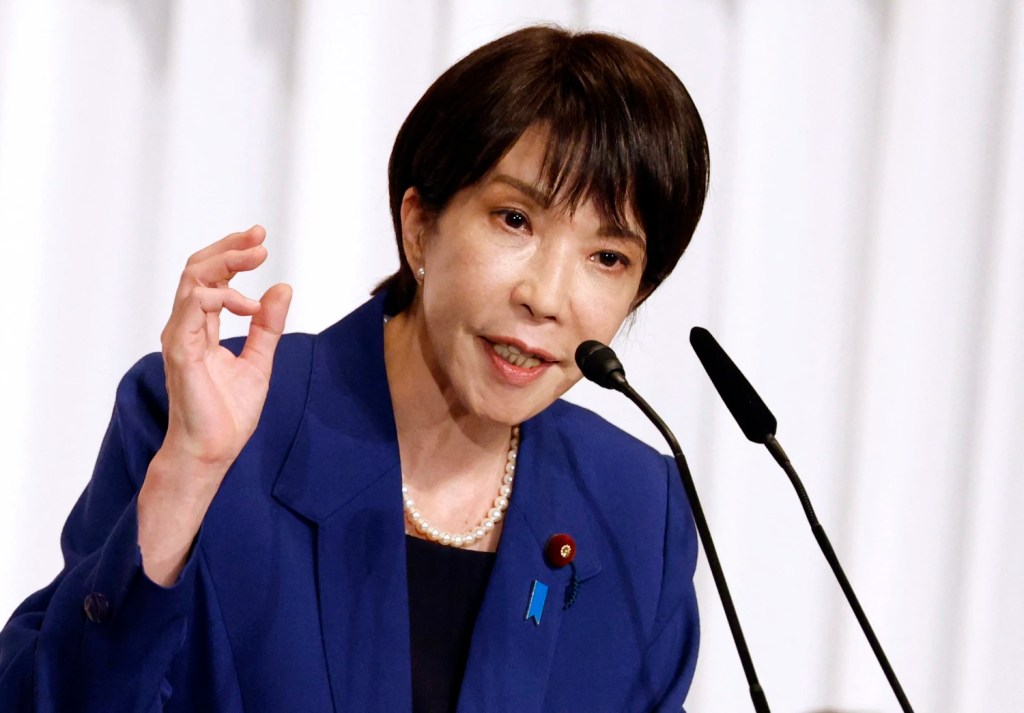
Tokyo, Japan — Japanese Prime Minister Sanae Takaichi has outlined an ambitious national strategy to dramatically expand the global reach of Japan’s entertainment and content industries, positioning them as a core pillar of the country’s economic growth and international influence. Speaking at a recent conference focused on the future of Japan’s content sector, Takaichi emphasized the government’s commitment to transforming Japanese pop culture into a globally competitive industry through sustained public–private collaboration.
At the conference, Prime Minister Takaichi announced that the Japanese government is setting a bold target of ¥20 trillion in overseas sales for Japan’s content industries. This includes internationally recognized sectors such as J-POP, manga, anime, film, and video games—industries in which Japan already holds immense cultural influence but has not fully converted that influence into long-term, scalable global revenue.
To achieve this goal, Takaichi stated that the government will utilize more than ¥55 billion in supplementary budget funding, applying these resources over multiple years to support international expansion, market adaptation, and competitiveness.
“By making use of a supplementary budget exceeding 55 billion yen, we will strongly support—over multiple years and through close cooperation between the public and private sectors—the overseas expansion of Japan’s content industries, with a goal of reaching 20 trillion yen in international sales,”
Takaichi stated.
A Shift From Caution to Global Engagement

For decades, Japan’s relationship with overseas entertainment markets has been cautious and, at times, resistant. While Japanese content has enjoyed organic popularity abroad, particularly in anime and manga, the industry itself has often viewed international markets as problematic or difficult to manage due to differences in culture, values, language, and content standards.
Historically, concerns over localization, censorship, and cultural misinterpretation have shaped this hesitation. Japan’s domestic entertainment industry developed largely around its own cultural norms and consumer expectations, making standardization for global audiences a complex challenge. In contrast to some Western or South Korean entertainment models, Japanese creators have traditionally prioritized domestic audiences over international scalability.
Several manga authors and creators have openly expressed discomfort with their works being distributed overseas. Some have cited a reluctance to face external criticism, while others have stated concerns that foreign audiences may misunderstand the cultural context, symbolism, or social nuances embedded in their stories. In some cases, creators preferred their works remain within Japan to preserve artistic intent rather than risk misinterpretation abroad.
This long-standing mindset has, at times, limited Japan’s ability to fully capitalize on international demand, despite strong global interest.
Government Support to Bridge Cultural and Structural Gaps
Prime Minister Takaichi’s initiative represents a clear departure from this historically cautious approach. Rather than leaving overseas expansion solely to private companies or individual creators, the government is signaling its intention to actively support and protect the content industry during globalization.
By framing the strategy as a multi-year, government-backed effort, Takaichi emphasized that creators will not be forced to navigate international markets alone. Policy support is expected to focus on easing structural barriers such as licensing complexity, overseas distribution challenges, intellectual property protection, and localization concerns—areas that have long discouraged broader global engagement.
The emphasis on public–private cooperation suggests an approach designed to respect creative autonomy while still encouraging international growth. The government’s role, as articulated by Takaichi, is to provide stability, funding, and infrastructure—allowing creators to focus on content creation without compromising artistic identity.
Repositioning Japanese Entertainment as an Economic Engine

Japan’s entertainment exports have long served as a source of cultural soft power, shaping global perceptions through iconic anime franchises, globally consumed manga, chart-topping music, and influential video games. However, Takaichi’s remarks underscore a strategic shift: Japanese content is no longer viewed solely as cultural expression, but as a key economic asset capable of driving national growth.
As global competition intensifies, particularly from South Korea’s highly coordinated entertainment exports and the dominance of U.S. media conglomerates, Japan’s government appears determined to modernize its approach. The ¥20 trillion overseas revenue target reflects not only ambition, but recognition that cultural influence alone is no longer sufficient in a rapidly globalizing digital economy.
A New Era for Japanese Content Abroad
Takaichi’s announcement sends a strong signal to creators, investors, and international partners alike: Japan is entering a new phase of global engagement for its entertainment industries. By acknowledging historical challenges while committing substantial resources to overcome them, the administration is attempting to balance cultural integrity with economic expansion.
If successful, the initiative could mark a turning point—one where Japanese entertainment maintains its distinct cultural identity while achieving unprecedented global scale. As policy measures begin to take shape, the coming years will reveal whether this long-held caution toward overseas markets can be transformed into confident, sustainable globalization.
My Thoughts on What do This Mean For Us International Fans?

There are many things that can be said about this announcement, good or bad, but at its core, it represents a positive step forward. For international audiences, Prime Minister Takaichi’s announcement represents more than a shift in economic policy, it reflects a broader change in how Japan views its global fanbase. For decades, overseas fans have supported Japanese entertainment through imports, conventions, streaming platforms, and fan communities, often with limited access to official releases or delayed localization. This new national strategy suggests that international fans are no longer peripheral, but a recognized and valued part of Japan’s long-term vision for its content industries.
An immediate effects of this can be a greater access to original material. With stronger government backing and clearer global objectives, studios and publishers are more likely to prioritize official international distribution. This can lead to faster worldwide releases of anime, manga, music, and games, often closer to their Japanese debut, while preserving the creator’s original intent rather than relying on heavily altered versions.
Increased investment also has the potential to raise overall production quality. Long-term funding and policy support can help stabilize production pipelines, improve working conditions within the industry, and allow creators more time to refine their work. For anime fans, this may translate into more consistent animation quality, fewer production delays, and adaptations that better reflect the source material. In turn, audiences benefit from a more polished and reliable viewing experience.
For fans who grew up with J-pop, anime, and manga, Japan’s decision to fully engage with international markets opens new opportunities for deeper connection. Artists and labels may find it easier to release music globally, tour overseas, and interact directly with international audiences. What was once limited by regional licensing and market hesitation now has the potential to expand without artificial boundaries.
Beyond entertainment itself, this initiative also supports greater cultural understanding of Japanese society and values. Japanese media often reflects social norms, historical context, and everyday life in ways that textbooks cannot. By increasing access to well-translated, thoughtfully localized content, international audiences gain a clearer and more nuanced understanding of Japan’s culture, its traditions, work ethic, humor, social relationships, and evolving societal issues. This helps reduce stereotypes and encourages appreciation rather than surface-level consumption.
With this initiative, a more accessible and timely global distribution model may also help reduce reliance on piracy. Historically, limited availability, delayed releases, and inconsistent licensing have pushed international fans toward unofficial sources. By offering high-quality, affordable, and timely official releases, Japan’s entertainment industry can provide legitimate alternatives that better serve global audiences while ensuring creators are fairly compensated for their work.
Rather than diluting Japanese identity to appeal globally, a well-supported international strategy can allow creators to present their stories authentically, trusting that global audiences are capable of understanding cultural nuance when given the proper context. For fans, this means engaging not just with entertainment, but with Japan itself on a deeper level.
Japan’s renewed commitment to globalizing its entertainment industry points toward a future where international fans receive more access, higher-quality content, and a stronger cultural connection. It marks a transition from passive global popularity to intentional global participation—one that benefits creators, industries, and audiences alike.
Thank you for reading this far!
Follow us for more news related to Japan and Anime!
Source: live.nicovideo
 Otaku Index