

According to numerous of news outlets it has been reported that Japan Post will be halting all shipments that are $800 dollars or less to the United States. This comes after it was announced that the Trump administrations move to end or reduce this exemption for certain shipments, especially those coming through foreign postal systems. This was meant to limit duty-free imports of low-value items (such as cheap goods online and gifts) and instead require customs check and taxes.
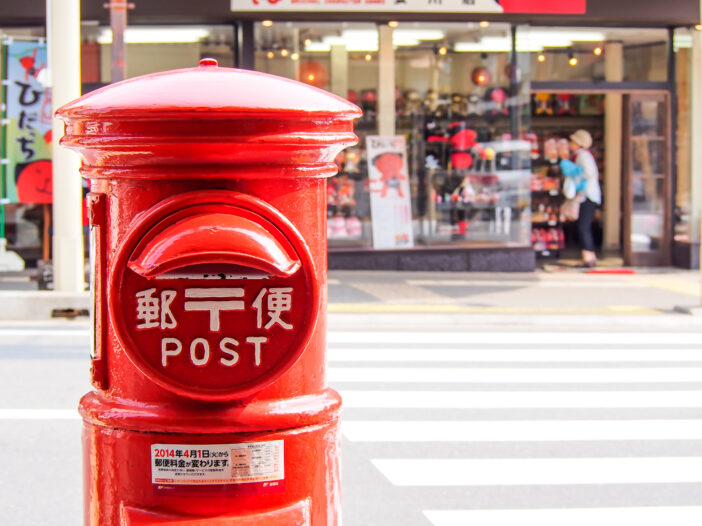
So how does this affect Japan Post?
Due to this rule change, they announced they would stop and not accept certain U.S.-bound packages indefinitely.
- Individual gifts that may be worth less than $800 will not be sent.
- Goods for sale (including commercial shipments).
Japan Post has stated that this change is “in line with other postal operators,” indicating that other countries’ postal services are expected to follow suit. However, this does not mean that all shipments to the U.S. will be suspended. Standard letters and small personal packages will continue to be accepted, but higher-value gifts and commercial items can no longer be shipped through Japan Post.
So what are the Japanese retailors response to this?
With the U.S. government’s decision to end the “De Minimis” exemption, which previously allowed international packages valued at $800 to enter the U.S. tariff-free, this has already creating a disruption across the Anime and hobby retail industry.
We have some of leading retailers such as HobbyLink Japan (HLJ), Tokyo Otaku Mode (TOM), GoodSmile Company (GSC), and J-List having issue statements outlining how their services will be affected and what customers can expect in the weeks to maybe even months ahead.
J-List‘s, a well known anime online retailor, owner and founder Peter Payne even had some thoughts on the matter in which in his blog he states, He likens the current moment to “a dark time for anime fans”, with EMS shipping halted and figures stranded in warehouses. Payne strongly opposes the abrupt removal of the De Minimis rule, calling the implementation “especially bad.” He points out a major flaw in the policy: it targets the country of origin—not shipment origin. This could mean higher tariffs even when products are shipped from Japan the figures are manufactured in China. He also highlights practical concerns about enforcement: there simply aren’t enough customs staff in the U.S. to handle this influx. “Who will store the packages? How will the taxes be collected?” He argues the policy rollout lacks adequate preparation time, recommending a six-month delay to ensure systems are in place. But still, he’s optimistic. He envisions a “period of adjustment” followed by a return to normal and assures readers that “J‑List isn’t going anywhere.”
HobbyLink Japan (HLJ)

HLJ warned that the new tariff rules could have a direct impact on their shipping options to the U.S., particularly for Japan Post methods. The company advised customers to prepare for tariffs potentially being applied to shipments after August 29th, 2025.
To help mitigate uncertainty, HLJ encouraged use of its Private Warehouse service, where customers can consolidate and hold orders. The retailer has temporarily lifted its six-month storage limit, allowing indefinite storage during this transition period. While HLJ recommended shipping orders as soon as possible, the company acknowledged ongoing shipping delays and cautioned that it could not guarantee delivery before the policy change takes effect.
Tokyo Otaku Mode (TOM)
TOM confirmed that Japan Post will suspend all U.S.-bound shipments starting August 27th, 2025. Orders impacted by the stoppage will appear as “Pending (Shipping Method Unavailable)” on customer accounts.
The retailer reassured customers that U.S. warehouse shipments remain unaffected, ensuring that certain products can still reach American buyers without disruption. Like HLJ, TOM has also offered indefinite storage upon request, giving customers flexibility while the situation develops.
Good Smile Company (GSC)

Good Smile Company echoed TOM’s announcement, confirming the suspension of Japan Post shipments to the U.S. from August 27th, 2025 (JST). Orders will automatically be placed on hold until Japan Post resumes services, with customers able to request indefinite storage if desired.
Importantly, Good Smile emphasized that this update builds on warnings it had already issued back in May 2025, when the company first addressed the possibility of tariffs on small international packages. By flagging the issue months in advance, Good Smile positioned its latest statement as part of a longer-term effort to prepare customers for shifting U.S. trade policies.
Shipments from Good Smile’s U.S. warehouse will remain unaffected by the suspension.
What are my thoughts on the matter?

I’ve worked with many overseas companies and handled customs and shipping. It can be complicated for international trade when rules change suddenly. The U.S. government’s decision to remove the “De Minimis” exemption hits small importers and consumers the hardest, people who can’t absorb the extra costs the way large corporations can.
The De Minimis rule has been a lifeline for small businesses and hobbyists. U.S. Customs data shows that nearly 3 million packages under $800 arrive daily through international mail. These shipments help fuel industries like anime merchandise and contribute billions to the U.S. economy through jobs, retail, and cultural exchange. Adding a flat $80+ tariff could wipe out the small profit margins that keep these businesses alive, pushing them out of the market.
Big companies can spread costs by shipping in bulk, but smaller shops and individuals can’t. This creates an uneven playing field where only major distributors survive, reducing competition and consumer choice.
We’ve seen this before: during the U.S.-China trade dispute in 2018, tariffs added about $1.4 billion in monthly costs for U.S. consumers. Tariffs aren’t usually paid by foreign producers, they fall on domestic businesses and households. For anime goods and collectibles, this means higher prices and, for some, less access to Japanese merchandises. Japan is the U.S.’s fourth-largest trading partner, with over $200 billion in trade annually. Disrupting reliable logistics could strain this important relationship.
Will the industry somehow adapt? Yes. Companies like HobbyLink Japan, Tokyo Otaku Mode, GoodSmile Company, and J-List are offering solutions like storage options and alternative logistics. But the risk is real: smaller retailers may close, and fans may have a hard time looking for other ways to order from Japan.
Thanks for reading my thoughts on the matter!

 Otaku Index